
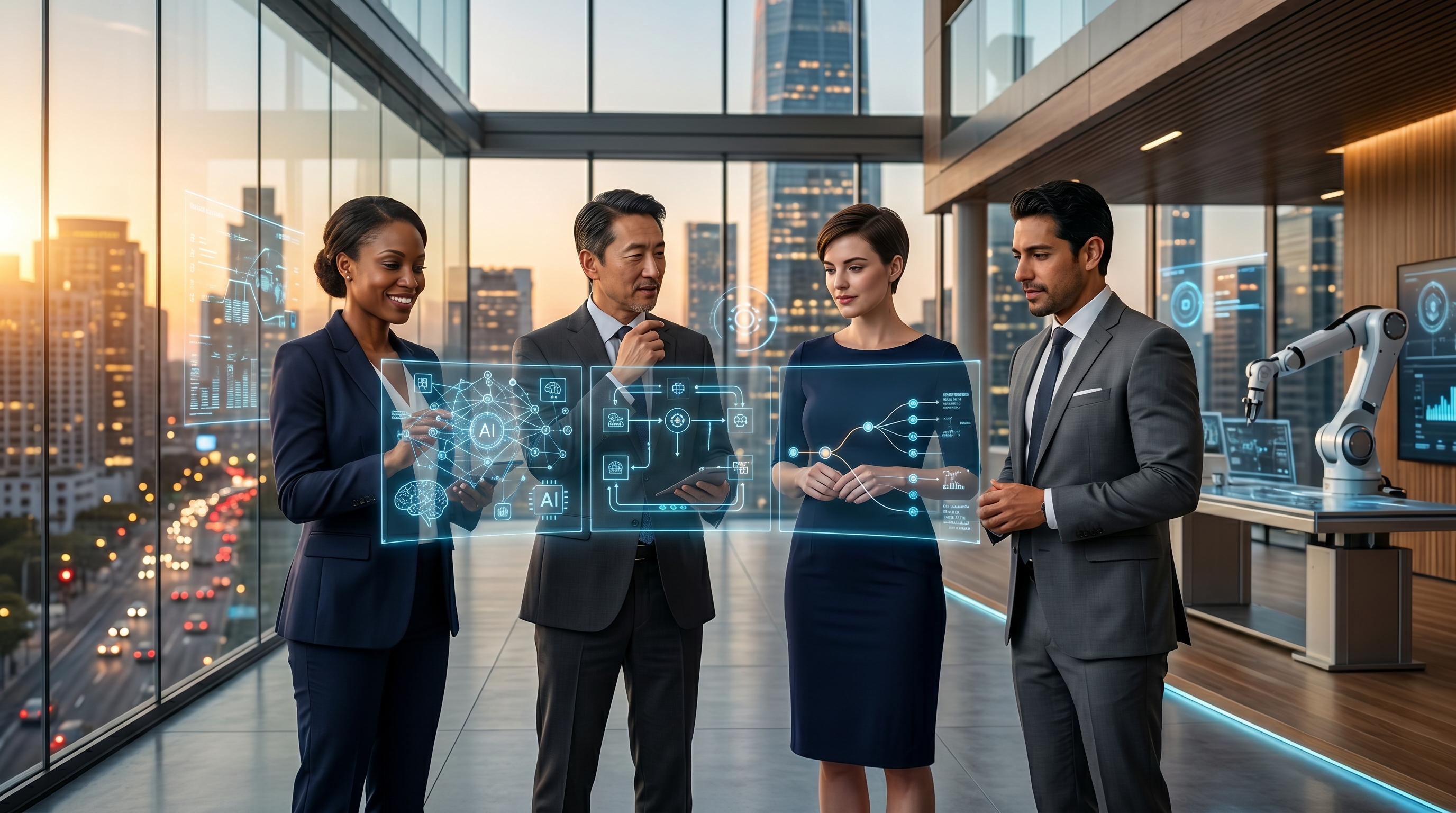
Artificial Intelligence (AI) is no longer a futuristic concept confined to research labs or science fiction movies. It has become an integral part of our daily lives, influencing how businesses operate, how consumers interact with technology, and most importantly, how work is performed. From automated customer service chatbots to advanced data analytics systems and intelligent recruitment platforms, AI is reshaping industries at a rapid pace. As this transformation accelerates, one question continues to dominate conversations across boardrooms, workplaces, and educational institutions: How will AI impact the job market and employment trends?
The answer is nuanced. AI is not simply replacing jobs—it is transforming them, creating new opportunities while redefining existing roles. For businesses, professionals, and policymakers, understanding this shift is essential to preparing for the future of work.
One of the most common fears surrounding AI is job displacement. Automation has already replaced repetitive and manual tasks in sectors such as manufacturing, logistics, and customer support. Tasks like data entry, invoice processing, basic reporting, and routine administrative functions are increasingly being handled by AI-powered systems.
However, history shows that technological revolutions rarely eliminate work entirely—they change the nature of work. Just as the industrial revolution created new industries and the internet era introduced digital careers, AI is giving rise to new professional opportunities.
Rather than replacing entire professions, AI is automating specific tasks within jobs, allowing employees to focus on strategic, creative, and high-value activities. For example:
In many cases, AI acts less as a replacement and more as a powerful co-worker.
As AI adoption grows, entirely new job categories are emerging. Organizations are seeking professionals who can build, train, deploy, monitor, and ethically manage AI systems.
Some of the fastest-growing AI-related roles include:
This means the future job market will not only need technical talent—but also professionals who understand AI strategy, governance, and business application.
One of the biggest shifts in employment trends is the growing emphasis on skills over traditional credentials. Employers increasingly prioritize practical capabilities over formal academic qualifications.
While AI excels at processing information and recognizing patterns, it still struggles with deeply human capabilities like empathy, relationship building, innovation, and complex decision-making. These human strengths will become even more valuable in an AI-powered workplace.
AI is also changing where work happens. Intelligent collaboration platforms, virtual assistants, workflow automation, and cloud-based tools are making distributed teams more efficient than ever. Companies are increasingly adopting remote and hybrid hiring models, allowing them to access talent globally rather than being restricted by geography.
The workforce is becoming more global, flexible, and skill-driven.
Perhaps the most important employment trend in the AI era is lifelong learning. Professionals can no longer rely on static skillsets. Continuous upskilling is becoming essential for career growth and job security.
Employees who embrace learning will be better positioned to thrive. Those who resist change may find themselves increasingly vulnerable to automation.
The future workplace will not be purely automated—it will be collaborative, where humans and AI work together.
AI will handle repetitive tasks, data-heavy analysis, process automation, pattern recognition, and operational efficiency. Humans will lead in creativity, strategy, ethics, leadership, relationship building, innovation, and emotional intelligence.
The organizations that succeed will be those that use AI not simply to cut costs, but to augment human potential.
Artificial Intelligence is fundamentally reshaping the job market and redefining employment trends. While automation will change many traditional roles, it will also create entirely new opportunities, industries, and career paths. The future belongs to adaptable professionals, forward-thinking businesses, and organizations willing to invest in skills, innovation, and responsible AI adoption.
The future of work is not humans versus AI—it is humans empowered by AI.